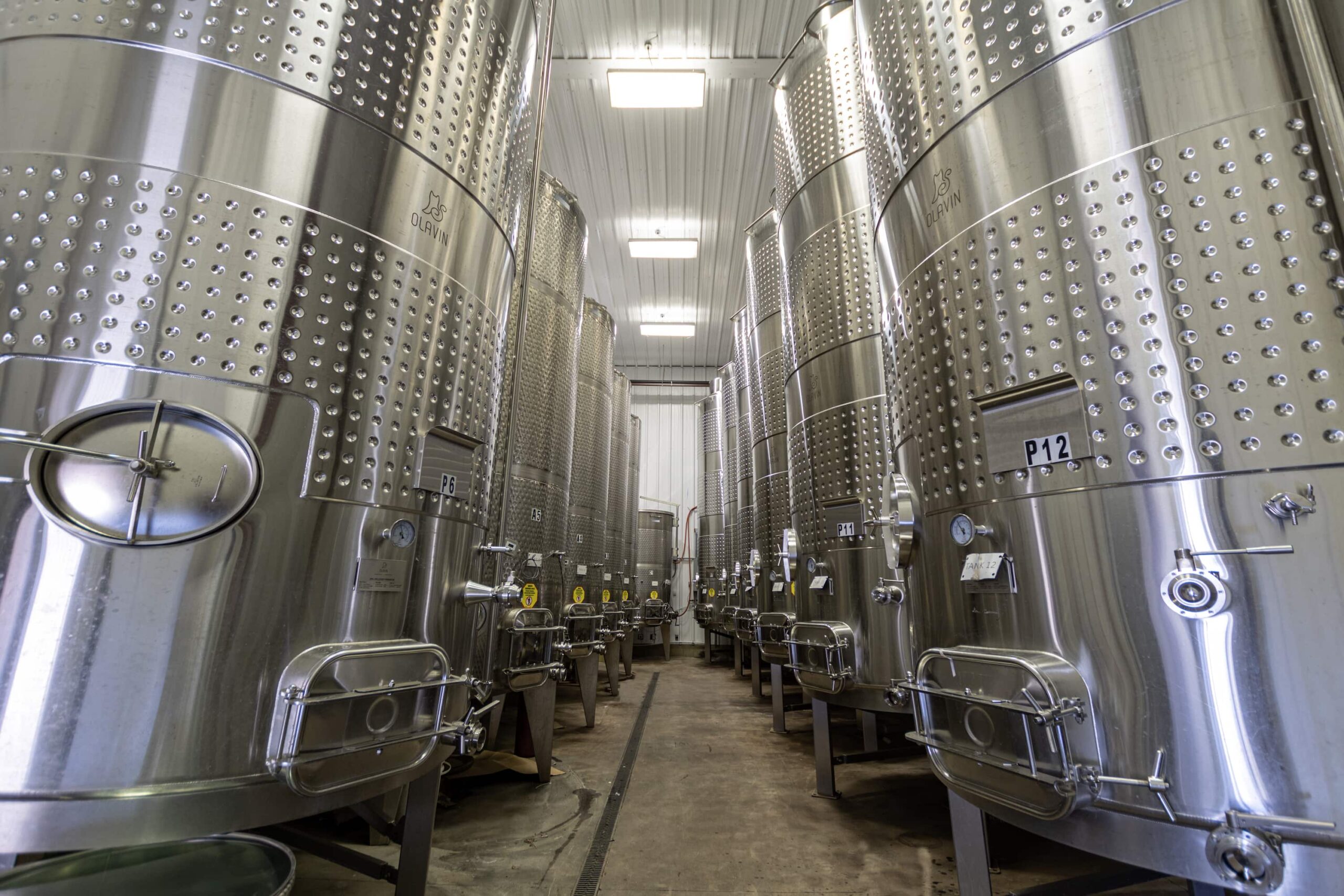
There is a moment during harvest when the centre of activity begins to shift.
For months, the work has unfolded among the vines. We have watched the season move from pruning and tying to canopy growth, veraison and ripening. Now, as grapes arrive from our estate vineyards, the story of the 2026 Okanagan vintage continues inside the cellar.
The pace is different here.
Harvest bins arrive. Fruit is assessed. Fermentations begin. Aromas fill the space, and decisions are made one lot at a time.
This is where a season of growing begins its transformation into wine.
From the Vineyard to the Cellar
Across our estate vineyards in Osoyoos, Peachland and West Kelowna, each parcel reaches maturity in its own time.
Elevation, exposure, soil and variety all influence how the fruit develops. That is why harvest is not a single event. It is a progression—one block, one variety and sometimes one row at a time.
The same careful attention continues when the grapes reach the winery.
Before moving forward, the fruit is evaluated. Ripeness is important, but it is only part of the picture. Flavour, acidity, texture and the condition of the skins and seeds all help guide the decisions that follow.
The objective is not to make every parcel taste the same. It is to understand what each one has to say.
The First Signs of a New Vintage
Fermentation is one of the most dynamic stages of winemaking.
Grape sugars begin their transformation into alcohol, releasing warmth and carbon dioxide along the way. Aromas become more pronounced. Colour, flavour and texture start to develop. What arrived as freshly harvested fruit gradually begins to reveal the foundations of a wine.
It is an active process that requires close attention.
Temperatures are monitored. Each lot is tasted and observed. The winemaking team follows how the fermentation is progressing and responds to what the wine needs, rather than relying on a single approach for every variety or vineyard.
Some decisions have an immediate effect. Others will only become clear months—or even years—from now.
Letting Each Vineyard Speak
At After 93, our approach begins with respect for the fruit.
Much of a wine’s character has already been shaped before the grapes reach the cellar: by the site where they were grown, the conditions of the season and the work carried out in the vineyard.
The role of the cellar is to carry that character forward.
Fruit grown in the warmth of Osoyoos develops differently from fruit grown farther north in Peachland and West Kelowna. Those distinctions remain important after harvest. Each lot follows its own path according to its variety, structure and intended expression.
Some wines are shaped around freshness and aromatic detail. Others require time to build texture, depth and complexity.
There is no universal recipe—only a series of thoughtful decisions guided by the fruit.
The Work After Harvest
When the final grapes have been picked, the vintage is far from complete.
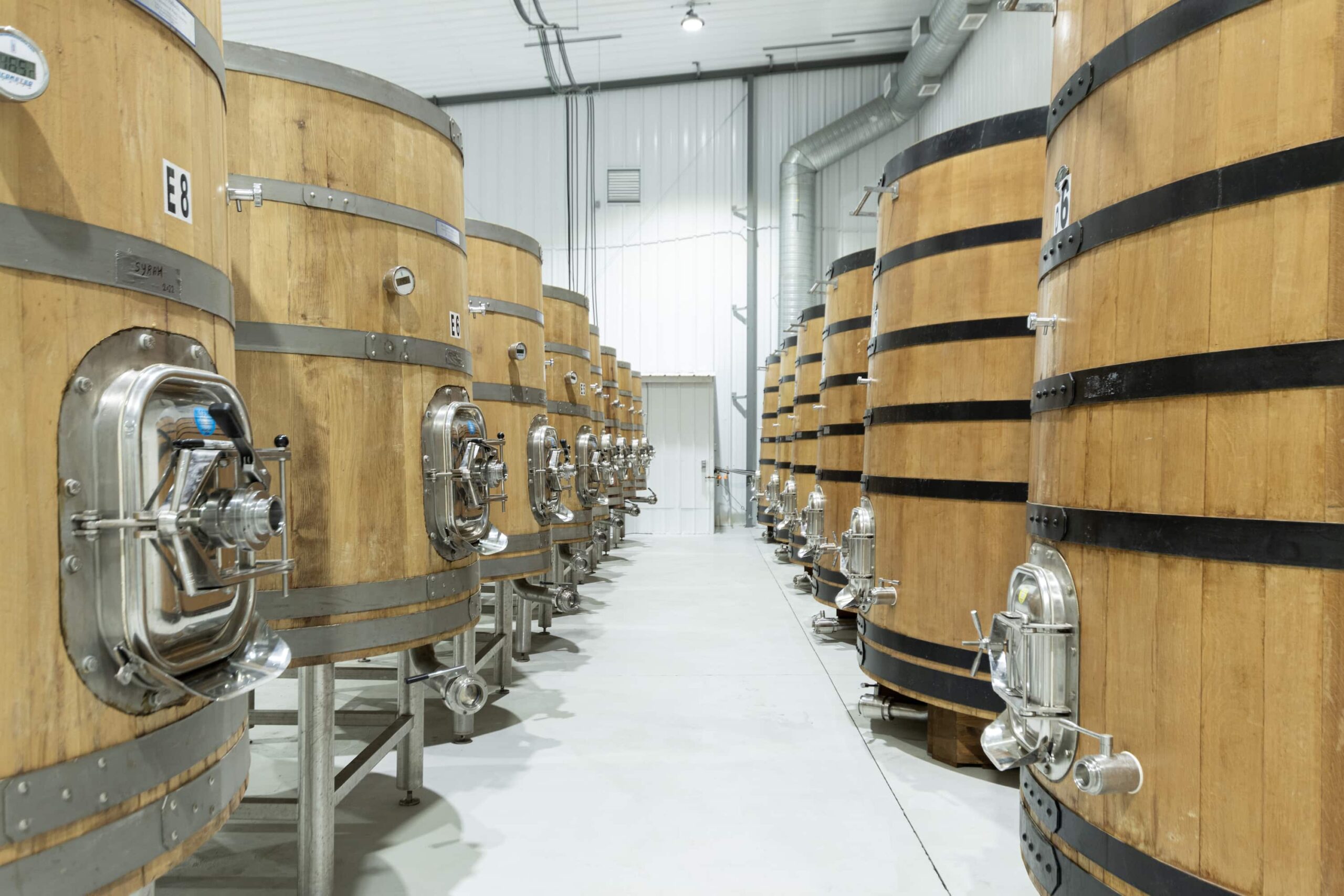
Fermentations must finish. Wines will be pressed, settled and prepared for the next stage of their development. Some will continue their journey in stainless steel, while others will mature gradually in barrel.
The urgency of harvest will begin to ease, but the work will continue quietly through the seasons ahead.
We will taste, observe and wait.
In time, the individual lots will become clearer. The character of each vineyard will come into focus, and the broader story of the 2026 vintage will begin to take shape.
For now, the cellar is full of motion—and possibility.
A season that began in the stillness of the vineyard is becoming the next collection of After 93 wines.